NCAAF Trends
Historical betting trends since 2008 show profitable strategies for specific team scenarios and coaching situations in football.
This site uses cookies for analytics and to improve your experience. By clicking Accept, you consent to our use of cookies. Learn more in our privacy policy.
This archive contains historically tested college football betting systems built from 2005 through the present season, including regular season and bowl game data.
Each system is derived from large-sample historical modeling, market behavior analysis, and structural tendencies unique to college football.
These are quantified, long-term betting edges — not narrative-driven trends or isolated upset stories.
The objective is to identify repeatable inefficiencies in NCAAF spreads, totals, conference mismatches, and public betting distortions.
Every system included in this archive must meet strict standards:
Clearly defined qualification rules
Meaningful historical sample size
Long-term profitability or strong expected value
Logical football-based explanation
Market inefficiency component
If a system is built from one bowl season or a short-term run, it is excluded.
This archive prioritizes durability over hype.
College football presents structural inefficiencies that differ from the NFL.
Unlike professional leagues, roster quality varies dramatically between programs.
This creates:
Inflated spreads
Mispriced non-conference matchups
Public overconfidence in ranked teams
Large performance disparities create exploitable line shading.
Conference reputation heavily influences betting lines.
Power Five teams often receive market inflation against:
Mid-major programs
Group of Five schools
Non-conference opponents
Reputation is frequently priced more aggressively than performance.
Bowl games introduce:
Coaching changes
Player opt-outs
Motivation variance
Travel impact
Public-heavy betting volume
Markets do not always efficiently price motivational asymmetry.
Teams play 12 regular season games.
Small sample sizes amplify:
Blowout overreactions
Ranked team bias
Heisman-driven inflation
Media narrative distortions
Public perception shifts faster than underlying performance.
College football totals are sensitive to:
Pace mismatches
Scheme contrasts (Air Raid vs option)
Weather conditions
Defensive conference identity
These factors create repeatable structural totals edges.
Systems are organized into structural categories such as:
ATS spread systems
Large favorite inefficiencies
Underdog conference spots
Non-conference matchup systems
Bowl-specific models
Ranked vs unranked distortions
Totals regression systems
Line movement value spots
Each system reflects repeatable pricing behavior — not temporary streaks.
Public college football systems typically fail because they:
Use extremely small samples
Ignore opt-out impact in bowl games
Rely on rankings rather than efficiency
Overweight rivalry narratives
Ignore closing line value
Confuse variance with edge
Short-term upset success does not equal predictive validity.
This archive filters out noise and focuses on structural consistency.
All NCAAF systems are built using:
Historical game logs (2005–present)
Closing spread and totals data
Conference strength metrics
Bowl game flags
Home vs road splits
Pace and efficiency indicators
Systems are tested across multiple seasons and scoring environments.
They are not optimized for single-season performance.
These systems are derived from the NCAAF Raw Numbers database.
Raw data allows deeper breakdowns including:
Conference vs conference profitability
Ranked team ATS inflation
Large favorite cover rates
Bowl motivation splits
Early-season non-conference volatility
Systems serve as frameworks — raw data refines them.
This archive can be used to:
Identify structural betting spots
Evaluate non-conference mismatches
Analyze bowl game motivation
Build or validate predictive models
Compare spread inflation trends
Consistency and discipline matter more than emotion.
For deeper modeling and expanded breakdowns, explore:
Conference Trend Studies
Bowl Game Research
Ranked Team Inflation Models
Market Timing & Public Sentiment analysis
Full expanded datasets are available inside the premium archive.
This archive contains historically tested college football betting systems built from 2005 through the present season, including regular season and bowl game data.
Each system is derived from large-sample historical modeling, market behavior analysis, and structural tendencies unique to college football.
These are quantified, long-term betting edges — not narrative-driven trends or isolated upset stories.
The objective is to identify repeatable inefficiencies in NCAAF spreads, totals, conference mismatches, and public betting distortions.
Every system included in this archive must meet strict standards:
Clearly defined qualification rules
Meaningful historical sample size
Long-term profitability or strong expected value
Logical football-based explanation
Market inefficiency component
If a system is built from one bowl season or a short-term run, it is excluded.
This archive prioritizes durability over hype.
College football presents structural inefficiencies that differ from the NFL.
Unlike professional leagues, roster quality varies dramatically between programs.
This creates:
Inflated spreads
Mispriced non-conference matchups
Public overconfidence in ranked teams
Large performance disparities create exploitable line shading.
Conference reputation heavily influences betting lines.
Power Five teams often receive market inflation against:
Mid-major programs
Group of Five schools
Non-conference opponents
Reputation is frequently priced more aggressively than performance.
Bowl games introduce:
Coaching changes
Player opt-outs
Motivation variance
Travel impact
Public-heavy betting volume
Markets do not always efficiently price motivational asymmetry.
Teams play 12 regular season games.
Small sample sizes amplify:
Blowout overreactions
Ranked team bias
Heisman-driven inflation
Media narrative distortions
Public perception shifts faster than underlying performance.
College football totals are sensitive to:
Pace mismatches
Scheme contrasts (Air Raid vs option)
Weather conditions
Defensive conference identity
These factors create repeatable structural totals edges.
Systems are organized into structural categories such as:
ATS spread systems
Large favorite inefficiencies
Underdog conference spots
Non-conference matchup systems
Bowl-specific models
Ranked vs unranked distortions
Totals regression systems
Line movement value spots
Each system reflects repeatable pricing behavior — not temporary streaks.
Public college football systems typically fail because they:
Use extremely small samples
Ignore opt-out impact in bowl games
Rely on rankings rather than efficiency
Overweight rivalry narratives
Ignore closing line value
Confuse variance with edge
Short-term upset success does not equal predictive validity.
This archive filters out noise and focuses on structural consistency.
All NCAAF systems are built using:
Historical game logs (2005–present)
Closing spread and totals data
Conference strength metrics
Bowl game flags
Home vs road splits
Pace and efficiency indicators
Systems are tested across multiple seasons and scoring environments.
They are not optimized for single-season performance.
These systems are derived from the NCAAF Raw Numbers database.
Raw data allows deeper breakdowns including:
Conference vs conference profitability
Ranked team ATS inflation
Large favorite cover rates
Bowl motivation splits
Early-season non-conference volatility
Systems serve as frameworks — raw data refines them.
This archive can be used to:
Identify structural betting spots
Evaluate non-conference mismatches
Analyze bowl game motivation
Build or validate predictive models
Compare spread inflation trends
Consistency and discipline matter more than emotion.
For deeper modeling and expanded breakdowns, explore:
Conference Trend Studies
Bowl Game Research
Ranked Team Inflation Models
Market Timing & Public Sentiment analysis
Full expanded datasets are available inside the premium archive.
Historical betting trends since 2008 show profitable strategies for specific team scenarios and coaching situations in football.
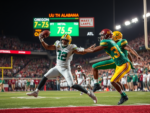
#001 Oregon is 16-3-0 OVER (+6.76 ppg, 84.2%) the total under head coach Chip Kelly after covering 4 or more of their last 6 games. On January 3rd, 2013, Oregon will face Kansas St. with a massive 75.5 O/U line. #002 Alabama is 14-2 (+19.06, 87.5%) SU under head coach Nick Saban at home after four or more…
#001 Bobby Hauck is 1-13 ATS with UNLV on the road Here’s something to consider for the next week of College football: Bobby Hauck is a nasty 0-14-0 (-33.79 ppg) SU and 1-13-0 (-14.07 ppg, 7.1%) ATS average line: +19.7 on the road with UNLV. #002 Mike Gundy is O/U: 29-10-0 (+9.56 ppg, 74.4%) as the head coach…
Every year I get the same question: “Do you run the same betting formula across MLB, NFL, and College Football?” The answer is absolutely not. Each sport behaves differently.Each market reacts differently.Each has its own version of momentum, regression, and public bias. If you treat them the same, you lose. Let’s break down the structural differences….
Note: Please email therber2@gmail.com if you spot any broken links. NCAAF SYSTEM #001 Take a conference road dog for +3 to +11.5 that just lost as a 10 or more point favorite. In database history this is ATS: 78-29-4 (+3.0 ppg, 72.9%)! SDQL TEXT: “C and p:L and p:line< =-10 and AD and 12>line>=3“======================== NCAAF SYSTEM #002…
"Picks & Systems" – 9.17.2011 SDQL #002 – (NCAAFB) ProcomputerGambler.com THE RESULTS: Current Season Record: 1-0-0 (100%) ATS (Last Updated 9.20.2011) Long Term Results: 56-26-0 (68.3%) ATS (Last Updated 9.20.2011) THE DESCRIPTION: Keep this in one in your back pocket. It's based on four parameters, and simple concept: Since 1980, College Football teams that just rolled at…
End of content
End of content